For Australia
Your own AI that no one can switch off.
Ready-made, private and offline. A A$45 download that sets up a small AI on your laptop, with Wikipedia, WikiMed and Australian maps on the way beside it.
Your questions never leave your laptop. There's no account and no login, and it keeps answering with the Wi-Fi off. It runs on an ordinary Windows or Mac laptop with 8 GB of RAM.
One payment, instant download, 30 days to change your mind.
Offline assistantWi-Fi off
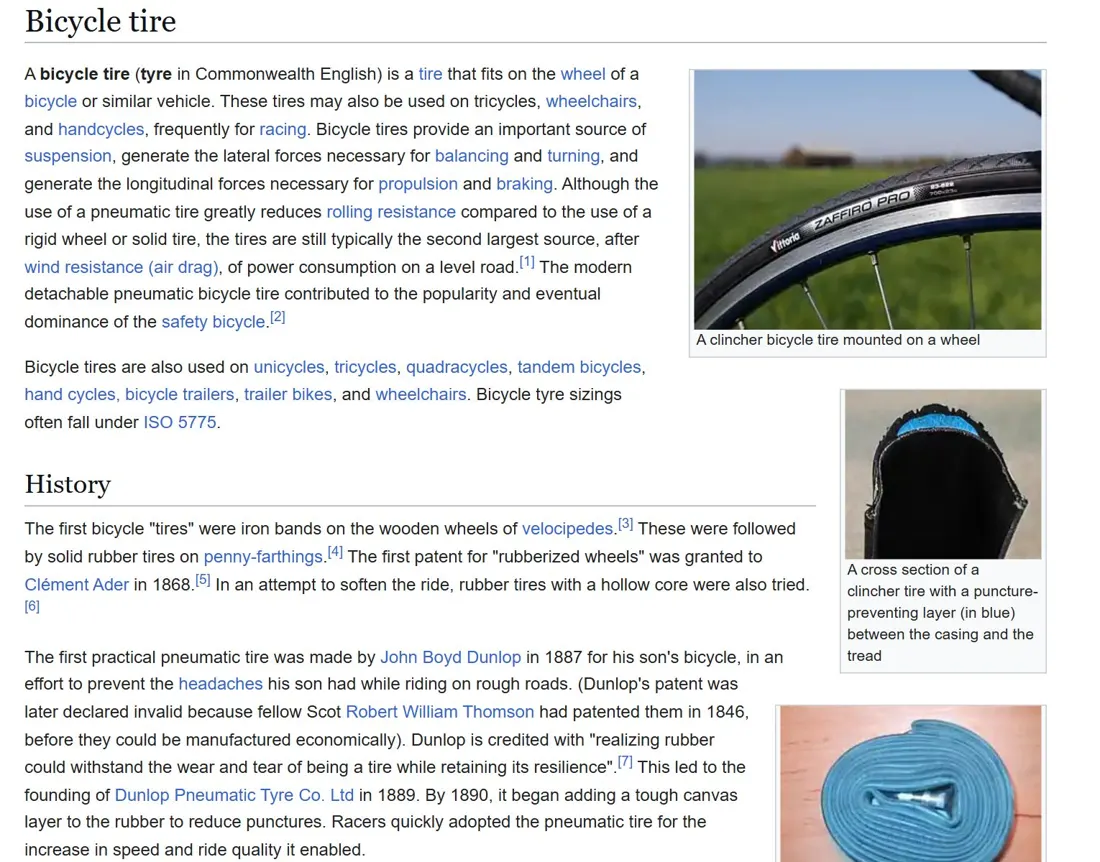
How do I fix a bike puncture?
1. Lever one side of the tyre off the rim.
2. Pump a little air in, listen for the hole.
3. Roughen, glue, patch, refit, pump.
Check it: Wikipedia, "Bicycle tire".
How answers look: short steps, plus the article to check them against.
Everything you ask lives on someone else's server, under their rules.
ChatGPT, Claude and Gemini answer from data centres you'll never see. That works well most of the time. It also means the company decides when it's up, what changes and what happens to your questions.
It can go down. Every online service has bad days. OpenAI lists its own on a public status page, dated. Most are partial: one feature down, slower answers, or more errors than usual.
It can change. Plans, limits and models change on the provider's timetable, not yours.
It sees what you ask. What you type goes to their servers and is handled under their privacy policy, not yours.
OpenAI's status page posted 25 incidents in 30 days. See the history
Counted from status.openai.com, read 1 Nov, 15:08 NZT. Most were partial, not full outages, which is normal for any big online service. More on AI Watch.
Australia's emergency guidance starts with radio and a plan. This covers the questions.
ABC Emergency suggests setting your local ABC station in your car, on ABC listen and on a battery-powered radio, so you can stay informed in an emergency.
A radio tells you what's happening. The Offline Brain is for the other questions: how to do something, what a word or a symptom means, how a thing works. It runs on your laptop's battery with no internet.
Your plan comes first, and your state emergency service shows you how: NSW SES has an emergency planning tool and checklists, and VICSES covers planning for emergencies at home. Australian Red Cross has a free household plan, RediPlan. In an emergency, call Triple Zero (000). We're a small New Zealand business, not part of any emergency service.
A private AI now fits on an ordinary laptop.
Small open AI models now run without the cloud. Ours is a 4B model, about 2.7 GB, that runs on a laptop with 8 GB of RAM and no graphics card. You ask in plain English, the way you'd ask ChatGPT.
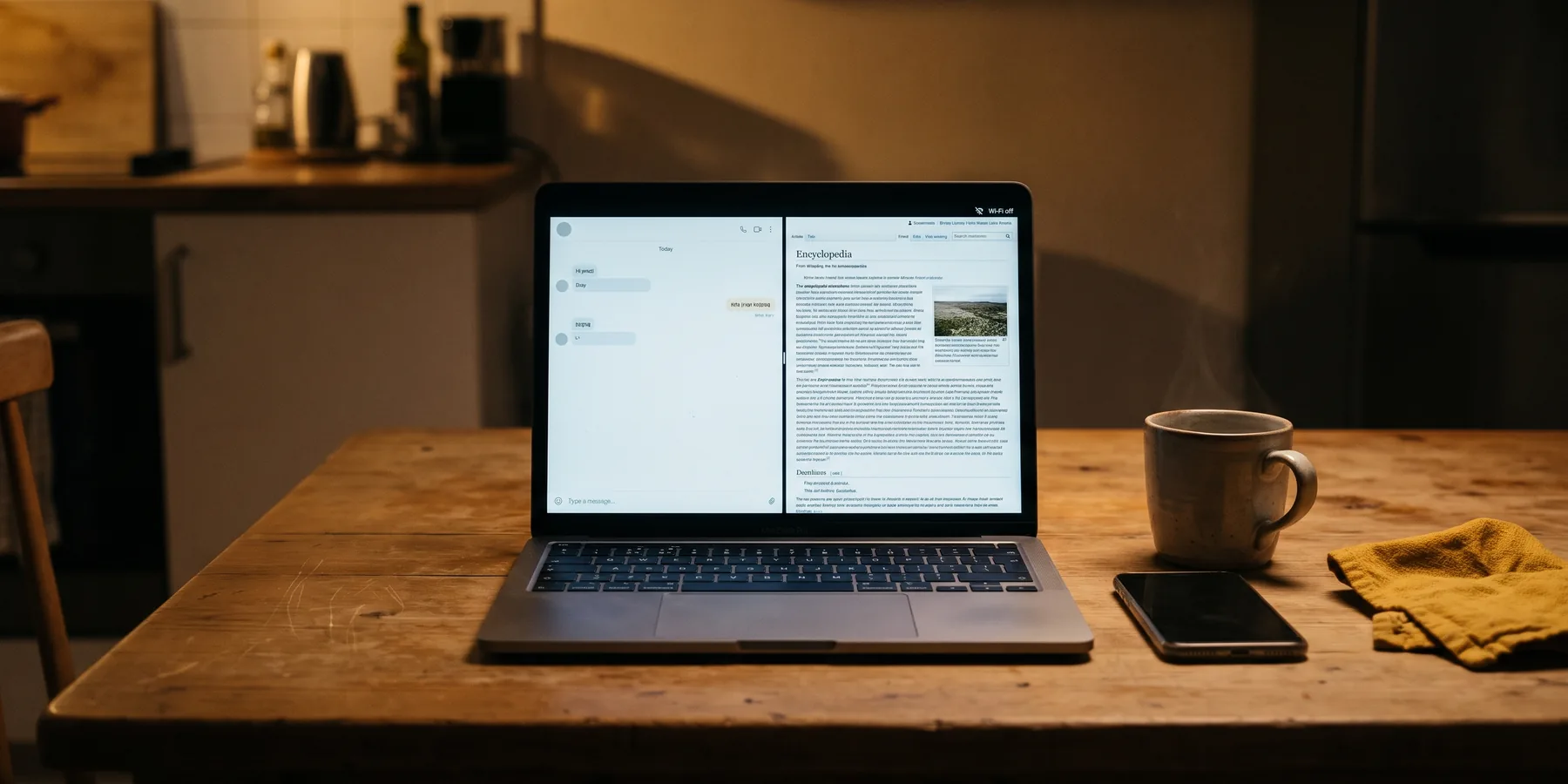
It's weaker than ChatGPT and can be wrong. So every answer shows the Wikipedia or WikiMed article it used, and you can read that article yourself. On the right: a real screenshot of Wikipedia's "Bicycle tire" article in the Kiwix reader, Wi-Fi off.
Australian maps are being added
They aren't in the download yet. Today you get the AI, Wikipedia and WikiMed, which work the same anywhere. If offline maps are the main reason you'd buy, wait until they're in.
Also in the download: the AI, WikiMed, and Wikipedia in the size you pick. Essentials is the 1 million most-read articles as text (about 21.8 GB in total for now). Full is every English article with images. Both are in the one price, and you can switch in the installer.
Our crank and solar radio and power bank aren't sent to Australia yet, because we haven't confirmed delivery there. The download works in Australia today.
30 minutesto download Essentials on a 100 Mbps line. Full takes about 3 hours.
Set it up in one evening, then turn the Wi-Fi off.
This is the part we do for you. The installer checks your free space, fetches each file from its official source, checks every file against its published checksum and sets up the start page. If the connection drops, it carries on where it stopped.
Your own copy of the answers, for the day the cloud goes quiet.
A$45, once. ChatGPT Plus is US$20 a month, and this one you keep.One payment, and this one you keep. It won't replace ChatGPT. It's the copy that's still yours with the Wi-Fi off. If it's not for you, ask for your money back within 30 days.
ChatGPT Plus price from OpenAI's help centre, read 1 Nov 2026.
Bought once, kept up to date for a year
For 12 months we email you when a new tested build is ready, with a one-click update. After that, it keeps working exactly as it is.
Rather have it on a USB?
We're gauging interest in a pre-loaded drive. Join the waitlist: no payment, one email if pre-orders open.